
Stabilizer AVR (Automatic Voltage Regulator)
A Stabilizer AVR (Automatic Voltage Regulator) is an essential electrical device used to maintain a stable output voltage, protecting equipment from voltage fluctuations, surges, under-voltage, and over-voltage conditions. AVRs are widely used in industrial, commercial, and residential applications where power quality is critical.


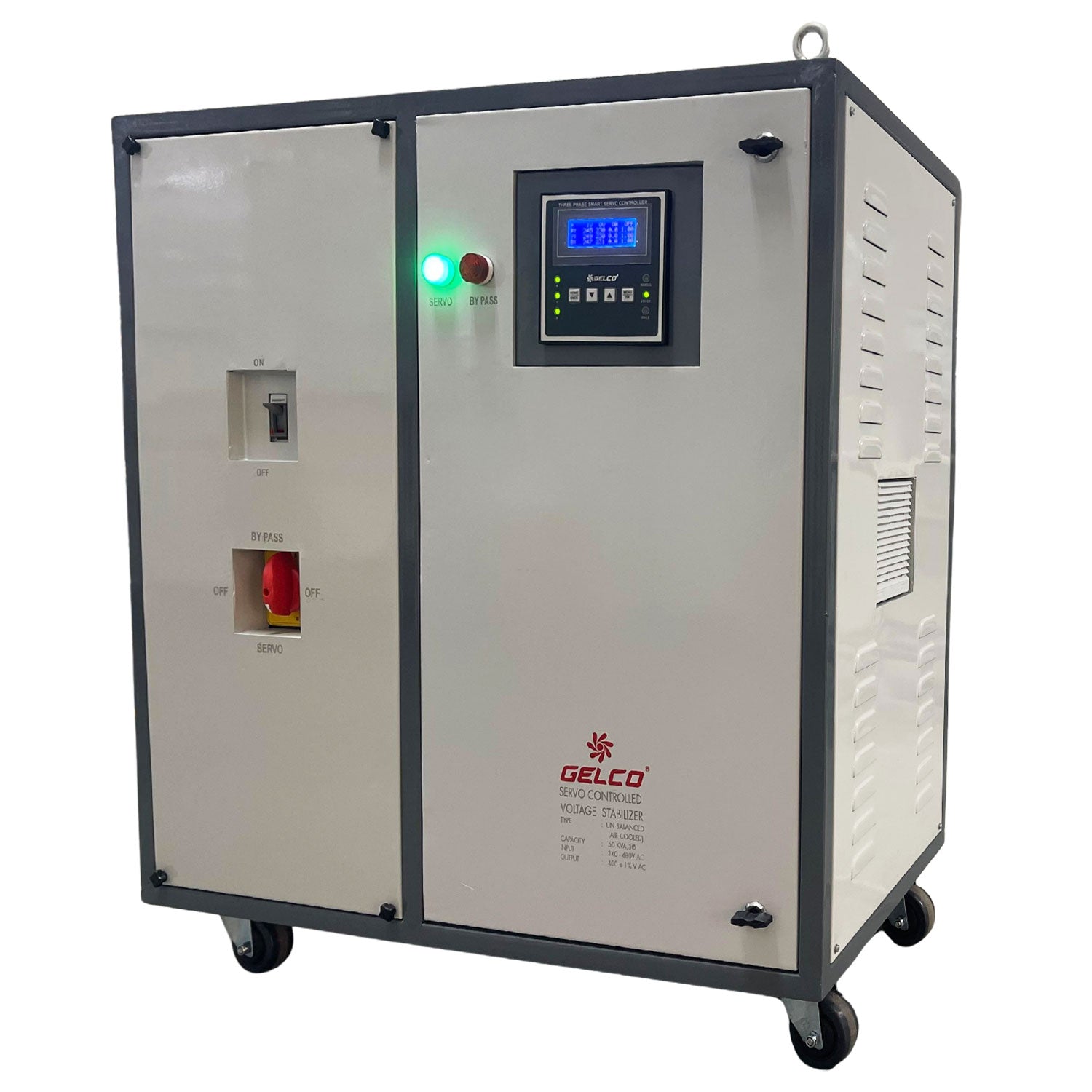
Types of Stabilizer AVR
1. Servo Voltage Stabilizer (Servo AVR)
-
Uses a servo motor with variac transformer
-
High accuracy (±1% to ±2%)
-
Ideal for industrial machinery, CNC machines, medical equipment
-
Handles wide input voltage fluctuations
2. Static Voltage Stabilizer (Static AVR)
-
Solid-state electronic components
-
Fast response time
-
No moving parts (low maintenance)
-
Suitable for sensitive electronics, data centers, laboratories
3. Single-Phase AVR
-
Used for residential and light commercial loads
-
Common in homes, offices, small equipment
4. Three-Phase AVR
-
Designed for industrial and heavy-duty applications
-
Used in factories, plants, compressors, pumps
Key Features:
-
Automatic voltage correction
-
High efficiency and reliable performance
-
Protection against over-voltage, under-voltage & surges
-
Digital display (input/output voltage, current)
-
Short circuit & overload protection
-
Long service life with minimal maintenance
Applications:
-
Industrial machinery & automation systems
-
Oil & gas facilities
-
Hospitals & medical equipment
-
Data centers & telecom systems
-
Laboratories & test equipment
-
HVAC systems and elevators
Technical Specifications (Typical):
-
Input Voltage Range: Wide range (e.g., 140–260V / customized)
-
Output Voltage: Stable (±1–3%)
-
Capacity: From 1 kVA to 5000 kVA
-
Frequency: 50 / 60 Hz
-
Cooling: Air-cooled or oil-cooled
A Stabilizer AVR ensures equipment safety, energy efficiency, and uninterrupted operation, making it a critical component in unstable power environments.