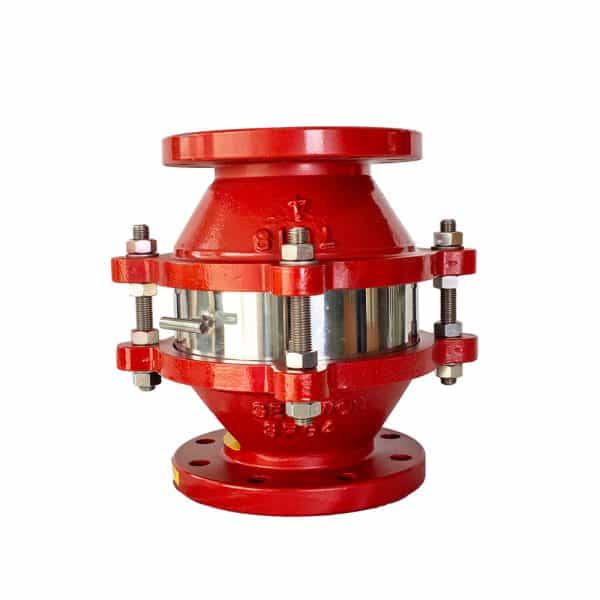
A flame arrestor is a safety device used to stop the propagation of a flame front in a gas or vapor mixture, preventing a fire or explosion from spreading to other parts of a system. They are widely used in industries handling flammable gases or vapors, such as chemical plants, oil refineries, gas storage facilities, and ventilation systems.
Flame arrestors work by cooling the flame and quenching the combustion reaction, typically through a matrix of narrow passageways or a mesh that absorbs heat and removes the energy needed for the flame to continue.
Types of Flame Arrestors
Flame arrestors are generally classified based on their design and application:
-
In-Line Flame Arrestors
-
Installed inside a pipeline or duct.
-
Designed to stop flame propagation within a confined space.
-
Used in gas pipelines, vent lines, or safety relief valves.
-
-
End-of-Line Flame Arrestors
-
Mounted at the end of a vent pipe or exhaust outlet.
-
Prevent flame from entering or exiting a vessel or system.
-
Common in storage tanks and ventilation openings.
-
-
Detonation Flame Arrestors
-
Designed to stop detonation flames (very high speed and pressure).
-
Built with robust construction to withstand shock waves.
-
Used in environments where explosions with detonations are possible.
-
-
Deflagration Flame Arrestors
-
Designed for slower burning flames (deflagrations).
-
Typically used in gas handling equipment with a lower risk of detonation.
-
-
Vacuum Flame Arrestors
-
Used to protect tanks or vessels from vacuum conditions that might cause air ingress and subsequent combustion.
-
-
Breather Flame Arrestors
-
Installed on tank vents to allow gas to breathe while preventing flame ingress.
-
Protects storage tanks from external flames entering the tank.
-